
Whiskey Decanter vs. Original Bottle: Should You Transfer Your Whiskey?

Updated: Sep 24
It started with a question from my buddy Todd.
On our last “Whiskey Sunday” FaceTime, Julie and I were catching up with our friends Todd and Stacey. During our conversation, Todd asked “Why do you keep so much of your whiskey in decanters? Is that actually better than keeping it in the original bottle?”
That's was a darn good question.
And honestly, it's one I've never really stopped to think about.
I like whiskey decanters. I like the way they look on the bar. I like the weight of a good piece of glass in my hand. And let's be honest—there's something about pouring a good bourbon or single malt from a beautiful decanter into a good whiskey glass that just feels right.
But Todd's question got me thinking.
Am I actually doing my whiskey any favors by taking it out of the bottle?
So I poured myself a drink and started digging into it.
As it turns out, the answer isn't simply “yes” or “no.” There are some very good reasons to use a decanter, and there are some equally good reasons to leave your whiskey right where the distiller put it.
And the answer may depend on how much whiskey you have left, how long you plan to keep it, and—perhaps most importantly—what kind of decanter you're using.
So Todd, this one's for you.
The Short Answer
If you're going to drink the whiskey relatively soon, you're entertaining friends, or you simply enjoy the presentation of a beautiful decanter,
If it's a special bottle that I'm going to nurse for months or years, I'd leave it in the original bottle.
This Is Why The Original Bottle May Actually Be Better
Sources: Advanced Mixology, VinePair, Bar6.com, liquor.com)
The original whiskey bottle isn't simply attractive packaging that gets thrown away once the bottle is opened.
It's designed to protect the spirit.
Once whiskey is bottled, its aging process in the traditional sense is over. It isn't continuing to become a 15-year-old whiskey simply because you've kept that bottle on your bar for another decade.
What can change, however, is what happens to the whiskey after the bottle has been opened. Air becomes the issue. As the whiskey level drops, the amount of air—or headspace—inside the bottle increases. Over time, that exposure can gradually affect the spirit's aromas and flavors. This is one reason the original bottle has an advantage that isn't immediately obvious.
Its narrow neck limits the surface area of whiskey exposed to the air, and its original closure was designed specifically to seal the bottle. A beautiful decanter may not do either quite as well.
So Why Are My Whiskeys in Decanters?
This is the part Todd was really asking about.
And the honest answer is:

Because I enjoy them - A Lot!
I wasn't transferring my whiskey because I had conducted a scientific study and determined that my decanters were superior storage vessels. I was doing it because I like the way they look on my bar.
If you are a frequent visitor to my site you know it's always about the ritual. When I pour myself a glass of whiskey and friends come over, I like reaching for my beautiful crystal glass decanter with the light reflecting off it as I pour it into a glass for them.
However after reaserching this subject I did reduce the number of whiskeys I store in decanters. Now I only store my "Go To" whiskey's I use on a weekly basis.
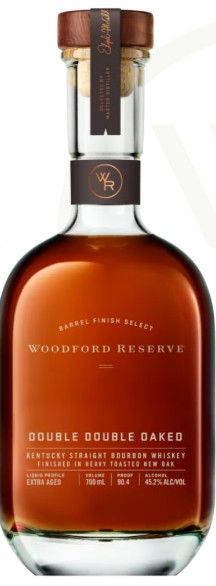
They include: Eagle Rare 10 - Henry McKenna 10 - Woodford Double Oak and Michter's Rye.
I'd be interested to know what spirits you would keep in a decanter - please coment
Todd, thanks for the question – Cheers!


Thank you Jeff. Appreciate you looking into this. As usual, your bar looks perfect. Looking forward to our next dram.